
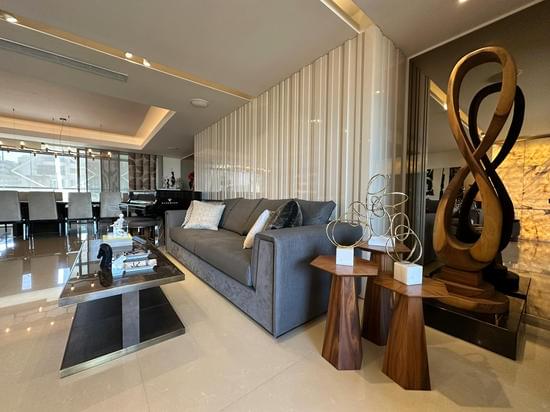
Wakad was the first PCMC node to absorb the Hinjewadi boom, and that history now defines its interiors market. A large share of its buildings are twelve to fifteen years old — well built, well located, and reaching the point where kitchens, bathrooms and wiring all need attention at once. Alongside them, new towers keep completing.
So Wakad has two distinct jobs: renovation, and new-possession fit-out.
The renovation market
If your Wakad flat dates from around 2010 to 2014, this is roughly what a full renovation involves:
- Electrical. Wiring specified for two air conditioners and a handful of appliances is now running four ACs, an induction hob, a dishwasher and a dozen chargers. A rewire with a modern distribution board and correctly rated circuits is the foundation of the project, not an add-on.
- Bathrooms. Waterproofing has a practical life of twelve to fifteen years. If tiles are coming off, redo the membrane while the floor is open. Doing it later means breaking a finished bathroom.
- Kitchen. Older Wakad kitchens were built with a masonry platform and basic shutters. Replacing with a modular system usually means breaking the platform, which changes plumbing and tiling too — budget it as one job.
- Windows and grilles. Original aluminium sliders leak dust and noise. Upgrading to a better system is one of the highest-satisfaction changes in a Wakad renovation.
- Damp check before joinery. External and west-facing walls in older buildings take driven rain. Treat first, then fix furniture.
The new-possession market
Newer Wakad towers behave like any recent handover: close the builder snag list first, allow for construction moisture in fresh plaster, size joinery to the service lift, book lift slots against a delivery plan, and design storage vertically because carpet areas are efficient rather than generous.
Constraints of a dense node
- Access and parking. Wakad's internal roads are busy and narrow in stretches. Material deliveries need to be timed outside peak hours or they simply do not arrive.
- Older buildings without service lifts. Several 2010-era Wakad societies have one passenger lift and a narrow staircase. Joinery has to be broken into components that can be carried up — a real design input.
- Occupied-flat renovation. Many Wakad renovations happen while the family is living there or renting nearby. Phasing room by room, with proper dust sheeting and a sequence that keeps one bathroom and a working kitchen available, is the difference between a manageable project and a miserable one.
- Neighbour tolerance. In a fully occupied society, noisy work needs to be concentrated into agreed windows rather than spread across weeks.
Where renovation budgets go wrong
The common mistake is spending on the visible layer — a feature wall, an elaborate ceiling — while leaving the wiring, waterproofing and window systems as they are. Five years later the visible layer still looks fine and the underlying problems have got worse and more expensive. In an older flat, spend from the inside out.
Wakad interior cost bands, 2026
- New flat, 2 BHK: ₹8 L to ₹14 L.
- New flat, 3 BHK: ₹14 L to ₹24 L.
- Full renovation, 2 BHK (civil, electrical, plumbing, joinery, finishes): ₹11 L to ₹18 L.
- Full renovation, 3 BHK: ₹18 L to ₹30 L.
- Partial renovation (kitchen and two bathrooms only): ₹5 L to ₹9 L.
On any renovation of a property over twelve years old, keep 12 to 15% in reserve — something behind a wall is always different from what the drawing assumed.
Our studio pairs interior work with in-house civil and structural capability, which is what keeps an older-building renovation from becoming open-ended. Book a free consultation for a site assessment of your Wakad flat, read more about how we work, or see delivered projects on our projects page.