
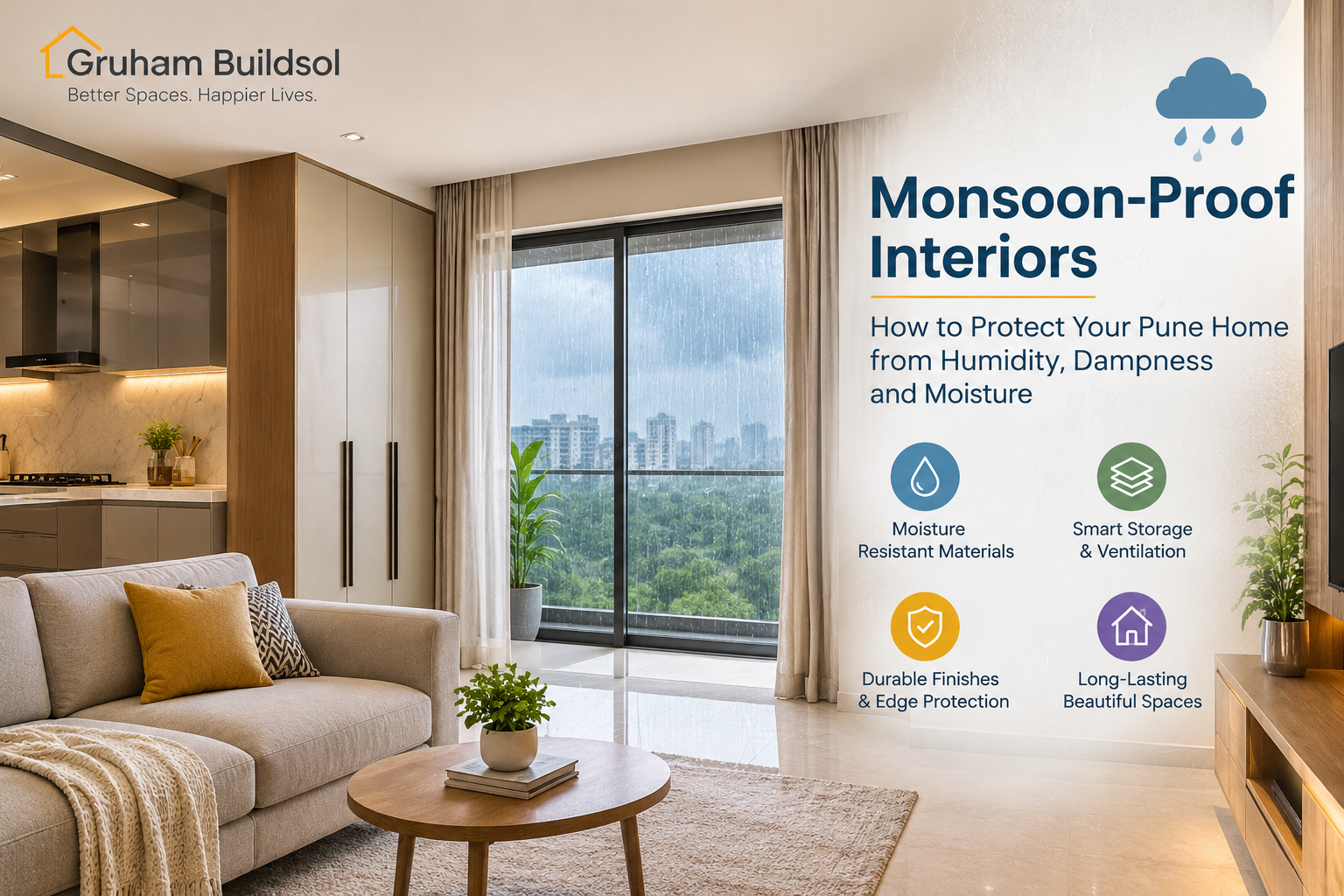
Monsoon-Proof Interiors: How to Protect Your Pune Home from Humidity, Dampness and Moisture
Pune homes experience a very different environment across the year. Dry and dusty months are followed by a long monsoon season, when humidity rises, windows stay closed for longer periods and moisture begins to expose weaknesses that may not be visible during the first few months after possession.
For homeowners planning interior design in Pune, monsoon protection should not be treated as an additional feature. It should be considered while selecting boards, finishes, edge treatments, storage systems, ventilation and even furniture placement.
A beautiful interior is valuable only when it continues to perform after several monsoons. The objective is not to make every material waterproof. It is to identify where moisture is most likely to enter and design those areas intelligently.
Why Pune Monsoon Matters in Interior Planning
Moisture rarely destroys an interior from the centre of a perfectly finished surface. Problems usually begin at exposed edges, joints, corners, sink areas, flooring transitions and poorly ventilated spaces.
A kitchen shutter may look perfect from the front while its bottom edge is exposed to water during daily cleaning. A wardrobe may have a premium finish but still develop problems if moisture repeatedly reaches the base. A bathroom vanity may fail because the board underneath the finish was not properly protected.
This is why moisture-resistant interior design for Pune homes requires attention to construction details rather than simply choosing an expensive finish.
Start With the Right Substrate
The board beneath the finish is one of the most important decisions in interior work. Depending on the location and expected exposure, designers may consider materials such as BWP plywood, HDHMR and other engineered boards.
The correct material depends on the application. Kitchen base units, bathroom storage and areas close to water require more careful specification than a dry bedroom wardrobe.
Do not select the board only because a material sounds premium. Ask where it will be used, how it will be protected and what happens if moisture reaches an edge.
Edges Matter More Than Most Homeowners Expect
When a board is cut, its internal layers become exposed. Edge banding provides an important layer of protection and also improves the appearance of the finished shutter.
For modular kitchen interiors in Pune, all four shutter edges should be considered, including the bottom edge. This area is particularly vulnerable because it is closest to mopping water, spills and humid air.
Machine-applied edge banding generally provides a cleaner and more consistent result than poorly executed site application. The quality of the edge is just as important as the decorative finish on the face.
Kitchen Planning for Pune Monsoons
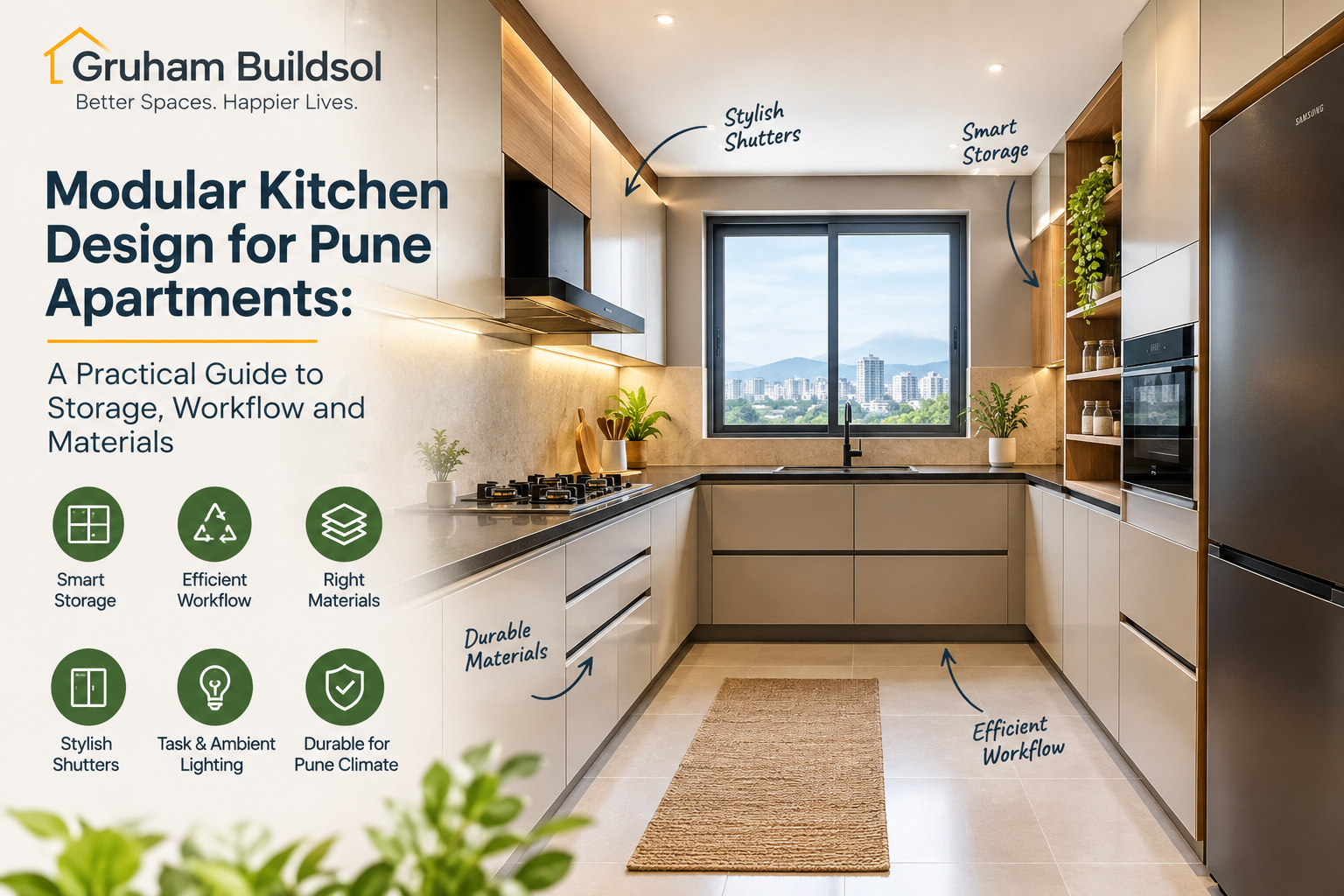
The kitchen is one of the hardest-working spaces in the home. Steam, cooking oil, water, cleaning products and frequent wiping all combine to create demanding conditions.
Keep sink-side storage carefully planned. Avoid allowing water to remain around shutter edges. Ensure the area under the sink can be accessed for cleaning and inspection.
For homeowners comparing kitchen interior materials in Pune, the best choice is often a balanced combination of durability and appearance rather than using one finish throughout the kitchen.
Wardrobes Need Airflow Too
A wardrobe pushed tightly against a damp wall can develop problems even when its external finish looks excellent.
Where appropriate, maintain sensible clearance and ventilation around wardrobes. Avoid storing wet clothing inside closed units. In rooms with limited ventilation, thoughtful wardrobe planning can make a noticeable difference.
Bathroom and Utility Storage
Bathroom vanities and utility cabinets need greater protection because they are located closer to water.
These areas should be treated differently from bedroom furniture. The design should allow easy cleaning and should avoid unnecessary exposed joints where water can accumulate.
Choose Finishes According to Location
There is no single finish that is best for every room.
Laminate is practical for many high-use applications because it is available in numerous textures and is relatively easy to maintain. Acrylic can provide a premium reflective appearance, while veneer offers natural timber character. PU is useful when a seamless painted appearance or customised profile is required.
The important question is not simply “Which finish is best?” but “Which finish is best for this particular location?”
Don't Ignore Ventilation
Good interiors cannot compensate for poor ventilation. Kitchens should have effective exhaust systems, bathrooms require adequate ventilation and rooms should receive fresh air whenever weather conditions permit.
During long humid periods, closed cabinets can benefit from sensible airflow and regular opening.
Five Monsoon Checks Before Handover
- Check the bottom edges of kitchen and utility shutters.
- Inspect areas below sinks for moisture exposure.
- Check wardrobe bases and wall junctions.
- Ensure bathroom storage is properly protected.
- Confirm that ventilation and exhaust provisions are practical.
Build for Pune, Not Just for the Showroom
Showrooms are dry, clean and perfectly lit. Real Pune homes experience cooking steam, children, dust, cleaning water and monsoon humidity.
That difference should influence every interior decision.
A well-designed home balances appearance, material performance, maintenance and future repair. When these factors are considered together, homeowners can enjoy interiors that remain attractive long after the handover photographs are forgotten.
For homeowners planning a Pune home interior design project, the best starting point is a detailed discussion about how every room will actually be used throughout the year.